
Key Data
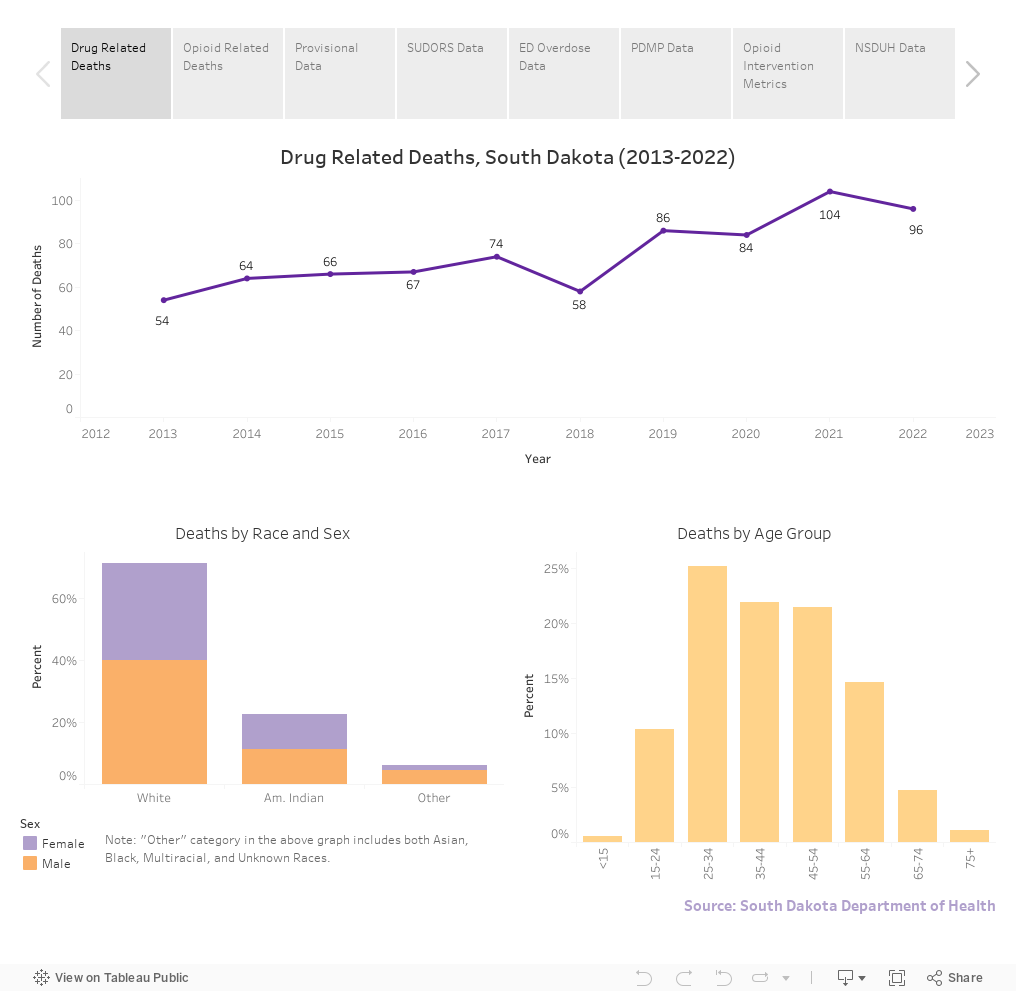
To stop unintentional opioid and other substance-related deaths, you have to start with data. The reporting dashboard below pulls in data regarding overdose deaths, intervention metrics, substance misuse across South Dakota and more.
By The Numbers
From 2020-2024 there were 357 overdose deaths in South Dakota.
Males made up 59% of South Dakota overdose deaths (2020-2024).
In South Dakota, American Indians die of an overdose at a rate 4.4 times higher than Whites (2020-2024).
Individuals 35-44 are at the highest risk for unintentional/undetermined overdose deaths in South Dakota (2020-2024).
62% of overdose deaths had at least one opportunity for intervention (2020-2024).
A potential bystander was present in 43% of overdose deaths (2020-2024).
Data Source: State Unintentional Drug Overdose Reporting System (SUDORS). For more information and data on SUDORS, visit https://doh.sd.gov/health-data-reports/substance-use-data-reports/state-unintentional-drug-overdose-reporting-system-sudors/
Naloxone Saturation and Public Access Locations
South Dakota Department of Social Services developed the Naloxone Saturation Model using suspected fatal overdoses, population data, and naloxone distribution data1. The Naloxone Saturation Model2 is a requirement by the Substance Abuse and Mental Health Services Administration (SAMHSA) aiming to ensure naloxone is sufficiently available in all sixty-six counties of South Dakota to prevent opioid-related overdose deaths. Naloxone saturation refers to the level of naloxone kit distribution at which county-level thresholds indicate sufficient coverage to support bystander access during opioid-related overdoses.
- 1 Data Sources: Suspected fatal overdoses (HIDTA, ODMAP), population data (U.S. Census Bureau), and naloxone distribution data (SD DOH)
- 2 Naloxone Saturation Model uses a multiple linear regression and ordinary least squares (OLS) analysis to examine the relationship between monthly naloxone distribution and overdose deaths at the county level.
To view the dashboard below on a mobile device, click here.
Contact Us
Are you a provider or professional with questions on this data? Reach out and let’s talk.